Travel Tips
Vietnamese Food: What to Eat in Vietnam
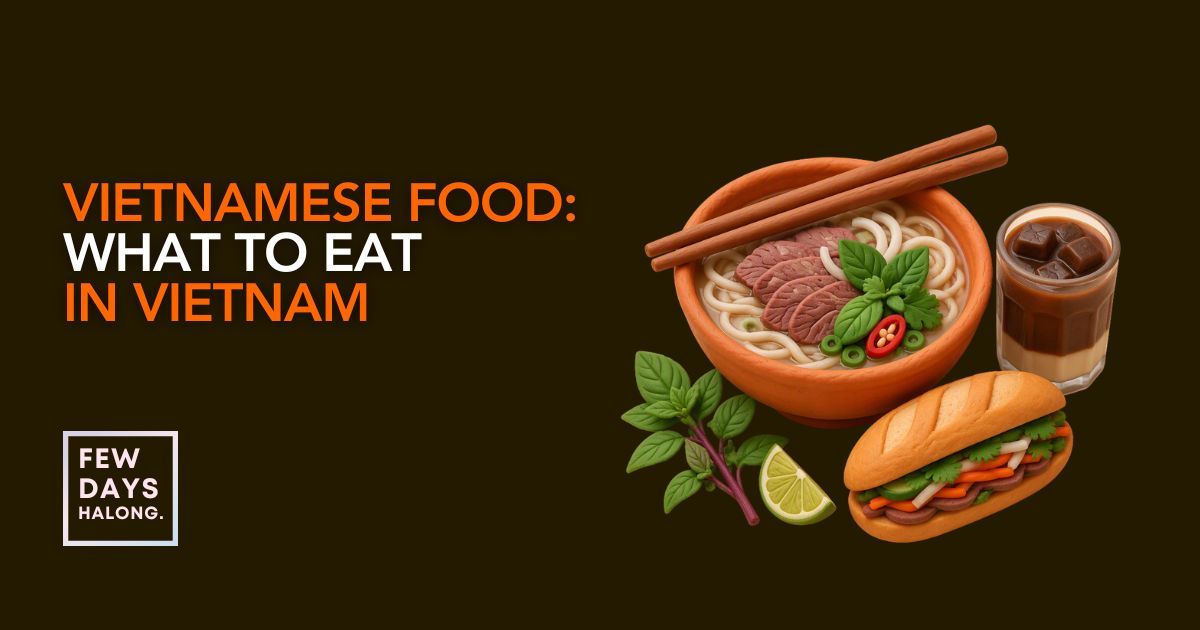
For a lot of travellers, the food is the best surprise of a Vietnam trip. It is fresh, light and endlessly varied, built on herbs, rice, broth and balance rather than heavy sauces, and much of the best of it is cooked at tiny street stalls for the price of a coffee back home. Eating your way around the country is one of the real joys of going, and knowing a few dishes and how the food changes from north to south makes it even better.
Below is our honest guide to what to eat in Vietnam in 2026: the dishes to seek out, how the flavours change along the country, the truth about street food and how to enjoy it safely, the coffee and drinks worth trying, and tips if you are vegetarian or have allergies. If it is your first trip, it pairs well with our guide to what to know before you go.
What makes Vietnamese food special
Vietnamese cooking is all about balance and freshness. A good bowl or plate plays sweet, sour, salty, bitter and savoury against each other, with a pile of fresh herbs, a squeeze of lime and a little chilli to adjust it yourself. Rice and rice noodles do the heavy lifting rather than bread or potato, and dishes tend to be lighter than much of the region's food. It is also one of the easiest cuisines to eat well on a budget, as the humblest stalls often serve the best single dish they have honed over years.
The dishes to try
A few are unmissable. Pho, the fragrant noodle soup, is the national dish and a fine breakfast. Banh mi, the crisp baguette stuffed with pate, pork and pickles, is the world's best travel sandwich. Bun cha, grilled pork with noodles and herbs, is a Hanoi institution, while com tam, broken rice with grilled pork, is the southern staple. Add fresh spring rolls (goi cuon), the crackly savoury pancake banh xeo, and the central classics cao lau and mi quang, and you have a week of very happy eating.
How the food changes north to south
Vietnam is long, and the food shifts as you travel. The north, around Hanoi, is subtle and savoury, less sweet and less spicy, and the home of pho and bun cha. The centre, especially Hue and Hoi An, is the most complex and often the spiciest, with refined imperial dishes and specialities like cao lau and mi quang found nowhere else. The south, around Ho Chi Minh City and the Mekong, is sweeter and more tropical, big on fresh herbs, coconut and abundant fruit. Eating your way down the country is a trip in itself.
Pho, and the joy of a bowl for breakfast
If you try one thing, make it pho. It is a clear beef or chicken broth simmered for hours with noodles, thin slices of meat and a plate of herbs, beansprouts, lime and chilli to add as you like. Locals eat it for breakfast, and a steaming bowl at a busy street stall first thing is one of the small pleasures of the trip. The northern version is cleaner and simpler, the southern sweeter and more garnished, and both are worth trying so you can pick a side in the friendly national debate.
Street food: is it safe, and how to do it
Street food is the heart of Vietnamese eating and is generally very safe, as long as you use a little common sense. Choose busy stalls with a high turnover, where the ingredients are fresh and everything is cooked in front of you, and follow the crowds and the queues of locals. A tiny plastic stool on a pavement often means better food than a smart restaurant. Stick to bottled water, be a little cautious with ice only in very rural spots, and ease into the richer food rather than diving in on day one. Our guide to whether Vietnam is safe covers the health side in more detail.
Vietnamese coffee and drinks
Vietnam is a coffee country, and it is a highlight in its own right. The classic is ca phe sua da, strong drip coffee over ice with sweet condensed milk, while Hanoi's egg coffee, a warm, custardy cup topped with whipped egg yolk, is a genuine one-off worth seeking out. Beyond coffee, try the fresh sugarcane and fruit juices, the smoothies (sinh to), and the famously cheap draught beer known as bia hoi, poured fresh on street corners for a few thousand dong a glass.
If you are vegetarian or have allergies
Vietnam is easier than most of the region for vegetarians, thanks to a strong Buddhist tradition of plant-based cooking. Look for the word chay, which means vegetarian, often on dedicated eateries and always around temples, especially on the first and fifteenth of the lunar month. Do be aware that fish sauce and shrimp paste are used widely, so it is worth learning how to ask. Allergies, particularly peanuts and shellfish, need care, so a translation card explaining your needs is genuinely useful given the language barrier at smaller stalls.
Fruit and sweet things
Save room for the sweet side. Vietnam is awash with tropical fruit, from dragon fruit and mangosteen to rambutan, custard apple and the notorious durian, and a plate of cut fruit is the usual way to end a meal. For pudding proper, seek out che, a whole family of sweet cups and drinks made with beans, jelly, coconut milk and fruit, served warm or over ice. Little coconut and pandan cakes turn up at markets, and the sugarcane juice pressed fresh at roadside carts is a treat on a hot afternoon.
Where and how to eat
Some of the best meals are the simplest. Follow your nose to the busy street stalls and markets, eat where the locals eat, and do not be put off by plastic stools and shared tables, as that is often where the best single dishes are. Point and smile if there is no English, join a queue, and try the thing everyone else is eating. A morning food walk with a local guide early in a trip is a lovely way to learn the dishes and gain the confidence to explore on your own for the rest of it.
So, what should you eat in Vietnam?
Start with pho and a banh mi, chase bun cha in Hanoi, cao lau in Hoi An and com tam in the south, and drink your way through the coffee. Say yes to the busy stall, the shared table and the dish you cannot name, and let the food change as you travel down the country. Eat like that and the meals become some of the most vivid memories of the whole trip, which is exactly how it should be in a country that takes its food this seriously.
How we build the food in
Part of travelling with a planner is that the eating is worked into the trip, not left to chance. As private planners, we carefully craft each trip around you, from a first-morning food walk to the right stall for the local speciality and restaurants that suit however you like to eat, so you taste the best of each place without the guesswork. Our private Vietnam itinerary planning handles it all, our packing guide and tipping guide cover the practicalities, and our safety guide the peace of mind.
Common questions about food in Vietnam
What food should I try in Vietnam?
Start with pho (noodle soup) and banh mi (the filled baguette), then bun cha in Hanoi, cao lau and mi quang in the centre, and com tam (broken rice) in the south. Add fresh spring rolls, banh xeo and plenty of Vietnamese coffee. Trying the local speciality in each region is the best approach.
Is street food safe to eat in Vietnam?
Yes, generally very safe with a little common sense. Choose busy stalls with high turnover where food is cooked fresh in front of you, follow the local crowds, stick to bottled water and be cautious with ice only in very rural spots. Ease into the richer food rather than diving in on your first day.
How does Vietnamese food differ north to south?
The north around Hanoi is subtle and savoury, less sweet and less spicy, and the home of pho and bun cha. The centre, especially Hue and Hoi An, is the most complex and spiciest, with dishes like cao lau. The south is sweeter and more tropical, big on fresh herbs, coconut and fruit.
What is Vietnamese coffee and what should I order?
Vietnamese coffee is strong drip coffee, most famously served as ca phe sua da, over ice with sweet condensed milk. Hanoi's egg coffee, a warm cup topped with whipped egg yolk, is a must-try one-off. Also worth trying are fresh fruit juices, smoothies (sinh to) and the very cheap draught beer, bia hoi.
Is Vietnam good for vegetarians?
Yes, easier than most of the region thanks to a strong Buddhist plant-based tradition. Look for the word chay, meaning vegetarian, common near temples. Be aware fish sauce and shrimp paste are widely used, so learn how to ask, and carry a translation card if you have allergies such as peanuts or shellfish.
What is the national dish of Vietnam?
Pho, a fragrant noodle soup of clear beef or chicken broth, rice noodles, thin slices of meat and a plate of fresh herbs, lime and chilli to add yourself. Locals eat it for breakfast, and a bowl at a busy street stall first thing is one of the small pleasures of a Vietnam trip.
Planning a trip to Vietnam?
Get your free personalised itinerary ›