Travel Tips
The Best Things to Do in Hue
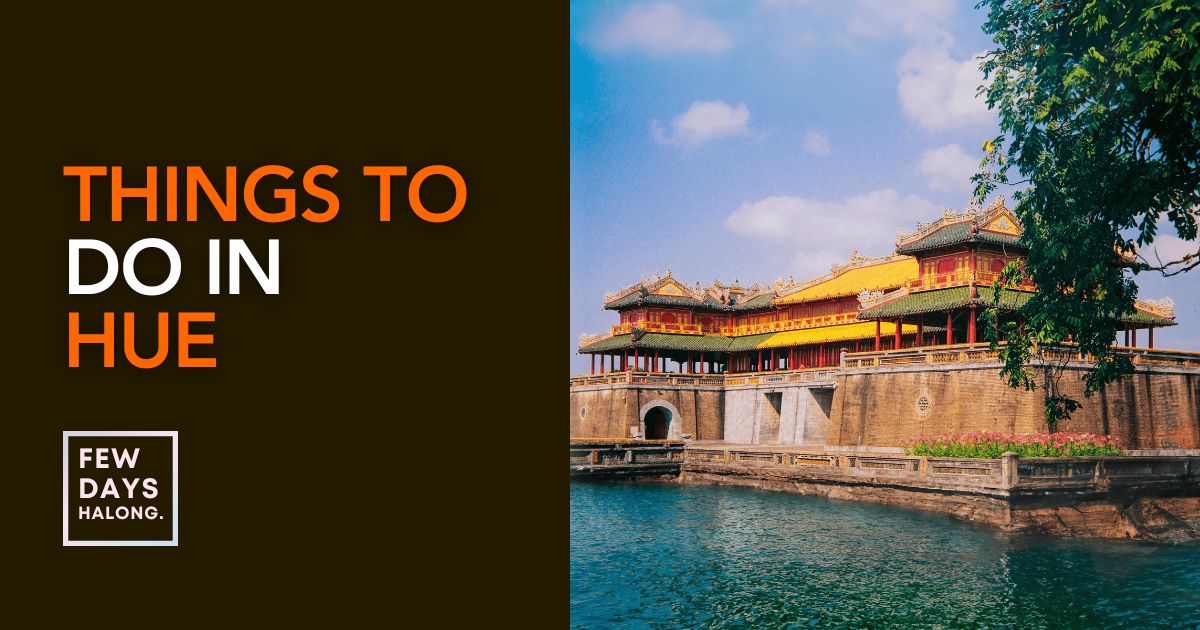
Hue was the capital of Vietnam under the Nguyen emperors, and it still carries itself with a certain quiet grandeur. Set on the banks of the Perfume River in the centre of the country, it is a city of walled palaces, riverside pagodas and royal tombs scattered through the surrounding hills, with a refined cooking tradition to match. For anyone interested in the history behind the scenery, it is the most rewarding stop on the coast.
Below is our honest guide to the things worth your time in Hue, from the Imperial City and the tombs to the river, the food and the country's old dividing line nearby. If you would rather have it arranged for you, our Hue tours cover the sights by private car and dragon boat with a local guide who knows the stories.
Explore the Imperial City
The Imperial City is the heart of Hue and the first place to head. Behind its long moated walls sits a vast complex of gateways, courtyards, temples and palaces built for the Nguyen dynasty, entered through the grand Ngo Mon gate beneath the flag tower. Much was damaged in the twentieth century, but a great deal has been carefully restored, and wandering between the halls and the lotus ponds gives a real sense of the old court. Give it a half-day at least. Our Hue Imperial City and royal tombs day trip pairs the citadel with the finest of the tombs so you see the essentials in one well-paced day.
Visit the royal tombs
Scattered in the hills south of the city, the tombs of the Nguyen emperors are among the loveliest sights in Hue, each one a small landscaped world of pavilions, courtyards and lakes. Tu Duc's tomb is the most serene, designed as a retreat in his lifetime; Minh Mang's is the most harmonious and symmetrical; and Khai Dinh's is the most ornate, a striking blend of Vietnamese and European style with a dazzling mosaic interior. You do not need to see them all, but two make a fine contrast.
Cruise the Perfume River to Thien Mu Pagoda
The Perfume River runs through the centre of Hue, and a slow boat along it is one of the nicest ways to spend a morning. The classic trip is upstream to the Thien Mu Pagoda, its seven-storey tower rising above the water as the symbol of the city. The traditional way to go is by dragon boat, and our Hue heritage tour by private car and dragon boat combines the river and the pagoda with the citadel and a tomb, so you see Hue from the water as well as the road.
Taste Hue's royal cuisine
Hue has arguably the most refined cooking in Vietnam, a legacy of the imperial kitchens that once had to please an emperor. The famous dish is bun bo Hue, a fragrant, gently spicy beef and noodle soup that is worth seeking out at breakfast. Beyond it, look for the little steamed rice cakes, banh beo and banh nam, and the elaborate multi-dish royal banquets some restaurants still serve. It is a city that rewards eating slowly.
Wander Dong Ba market and the old streets
For everyday life rather than palaces, the sprawling Dong Ba market by the river is the place to lose an hour among the produce, the conical hats and the food stalls. The lanes around it, and the walkable riverside, give a feel for the working city between the historic sights. It is also the best place to try the street versions of Hue's specialities at their freshest and cheapest.
Take the coastal train to Da Nang
One of the most scenic stretches of railway in the country runs south from Hue to Da Nang, climbing over the Hai Van Pass with the sea on one side and the mountains on the other. Doing this leg by train rather than car turns a simple transfer into a highlight of the trip. Our Hue to Da Nang heritage train arranges the journey with transfers at each end, so you get the views without the hassle.
Go deeper: the DMZ and the tunnels
North of Hue lies the old Demilitarised Zone that once divided the country, and for anyone drawn to the twentieth-century history it makes a sobering, memorable day. The Vinh Moc tunnels, where an entire village sheltered underground, and the sites along the former border give real weight to a story most travellers only half know. It is a longer day out, but a meaningful one.
So how long do you need in Hue?
One full day covers the Imperial City, a couple of tombs and the Perfume River, which is how many people visit, either on a day trip or an overnight between Hoi An and the north. Two nights is more comfortable and lets you add the food, the market and either the coastal train or the DMZ without rushing. History lovers could happily fill three.
How Hue fits a wider Vietnam trip
Hue sits in the middle of the country and pairs naturally with Da Nang and Hoi An just to the south, the three together making up the central leg of most Vietnam trips. The train over the Hai Van Pass links Hue and Da Nang beautifully, so many travellers do the culture in Hue and the beaches and Old Town further down the coast. We plan trips the other way round from most sellers: we start with how you want to feel and what you want to see, then choose the tours, hotels and transfers to match, and we run the whole thing from arrival to departure so there is one team to call if anything changes.
As private planners, we carefully craft each trip around you, so the suggestions above are simply the ones we think are worth your time. Our central Vietnam tours page shows how Hue links to Da Nang and Hoi An, and if you are shaping a longer route, our private Vietnam itinerary planning ties it into the whole trip.
Common questions about Hue
Is Hue worth visiting?
Yes, especially if you enjoy history and culture. Hue was Vietnam's imperial capital, and its citadel, royal tombs and riverside pagodas are among the country's finest sights. It gives real depth to the central coast alongside the beaches of Da Nang and the Old Town of Hoi An.
How many days do you need in Hue?
One full day covers the Imperial City, a couple of tombs and the Perfume River. Two nights is more relaxed and lets you add the food, the market and either the coastal train to Da Nang or a DMZ day trip without rushing.
What is the best thing to do in Hue?
Exploring the Imperial City is the essential experience, ideally paired with one or two of the royal tombs in the hills and a dragon-boat trip on the Perfume River to the Thien Mu Pagoda. Together they capture the old imperial capital.
What food is Hue famous for?
Hue has the most refined cooking in Vietnam, a legacy of its imperial kitchens. The signature dish is bun bo Hue, a spicy beef noodle soup, alongside delicate steamed rice cakes like banh beo and banh nam and elaborate royal banquets.
Is Hue better than Hoi An?
They offer different things and work best together. Hue is about imperial history, palaces and tombs, while Hoi An is a lantern-lit Old Town with tailors and nearby beaches. The scenic train over the Hai Van Pass links them, so most travellers enjoy both.
How do you get from Hue to Da Nang?
The coastal train over the Hai Van Pass is the most scenic option, with sea and mountain views for much of the way, and takes around three hours. A private car through the pass is quicker and more flexible, and either can be arranged as a sightseeing transfer.
Planning a trip to Vietnam?
Get your free personalised itinerary ›