Travel Tips
The Best Things to Do in Da Nang
Da Nang has gone from a place travellers passed through to one of Vietnam's most enjoyable stops in its own right. It sits on the central coast with a long ribbon of sand on one side, a river strung with lit-up bridges through the middle, and forested mountains and marble hills within easy reach. The airport is right in the city, so wherever you base yourself you are rarely more than fifteen minutes from your bed, which makes it a relaxed place to mix beach days with proper days out.
Here are the things worth building your days around, and how they fit together.
Ride the cable car to Ba Na Hills and the Golden Bridge
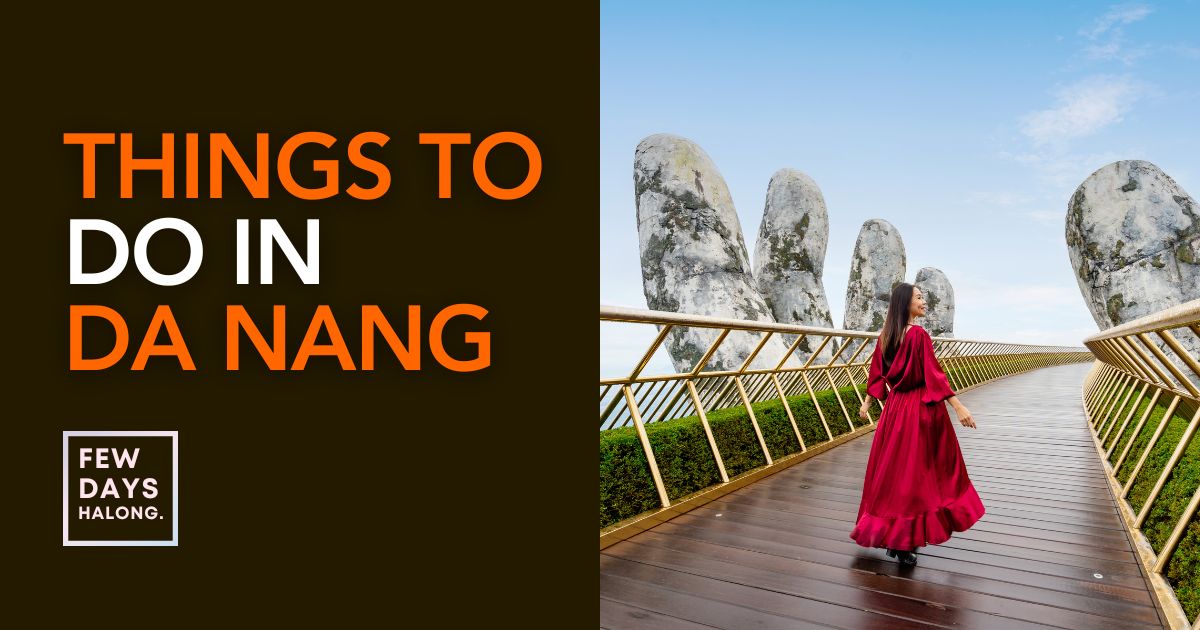
The single most photographed thing to do in Da Nang sits about an hour inland and high above it. A cable car, one of the longest and highest in the world, carries you up to Ba Na Hills, a cool hilltop resort of landscaped gardens, a French Village of cobbled squares and a fantasy park. The star is the Golden Bridge, a walkway that curves out from the hillside seemingly carried by two enormous weathered stone hands, opened in 2018 and instantly famous. Go early: the crowds build through the day and the summit can cloud over by afternoon. You can do it as a relaxed group day or, for a slower pace and your own timings, as a private trip. See our Ba Na Hills and Golden Bridge day tour or the private Ba Na Hills tour.
Climb the Marble Mountains
Just south of the beach, the Marble Mountains, or Ngu Hanh Son, are a cluster of five marble and limestone hills named after the five elements. The main one, Thuy Son, is riddled with caves and grottoes where Buddhist shrines sit under shafts of daylight, with pagodas and lookout points reached by steps or a small lift. At the foot of the hills, the Non Nuoc stone-carving village has been shaping marble for generations. It pairs naturally with the Son Tra peninsula or with Hoi An; see the Marble Mountains and Son Tra tour or the fuller Marble Mountains and Hoi An day.
Swim at My Khe Beach
My Khe is the beach that made Da Nang's name: a long, wide sweep of soft sand backed by a promenade, cafes and seafood spots, with warm and generally calm water from around May to August. It is clean, easy to reach from anywhere in the city, and lovely first thing before the heat builds. If you are still deciding between the beach, the city and the resort strips for your base, our guide to where to stay in Da Nang breaks down each area.
See the Dragon Bridge breathe fire
Da Nang's Dragon Bridge is exactly what it sounds like: a huge golden dragon arching over the Han River, lit up and shifting colour every night. On weekend evenings, usually around nine o'clock, the dragon's head breathes real fire and then jets of water, a short, genuinely fun spectacle that draws a crowd to the riverbanks. It is free, it is central, and it makes an easy end to an evening of riverside food and drinks.
Go up Son Tra to the Lady Buddha
North of the beach, the green Son Tra peninsula rises straight out of the sea. Its landmark is the Lady Buddha, a serene white statue standing sixty-seven metres tall at the Linh Ung Pagoda, the tallest in Vietnam and visible from much of the coastline. The drive up rewards you with sweeping views back over the city and bay, and the forest is home to troops of monkeys and the rare red-shanked douc langur. It is included on our Marble Mountains and Son Tra Peninsula tour.
Drive the Hai Van Pass to Hue
One of Vietnam's great coastal drives climbs north out of Da Nang over the Hai Van Pass, a switchbacking mountain road with the ocean falling away below and an old fort guarding the top. Beyond it lies Hue, the former imperial capital, with its walled Citadel, riverside pagodas and the emperors' tombs set among the countryside. Done as a full day it is a proper highlight; our Hue and Hai Van Pass day tour takes in the pass on the way and the imperial sights beyond.
Explore the markets and Cham heritage
Back in the city, Han Market and the larger Con Market are the places to browse for fabric, coffee, dried fruit and street food, and to get a feel for everyday Da Nang. A short walk away, the Museum of Cham Sculpture holds the world's finest collection of art from the Champa kingdom that once ruled this coast, sandstone gods and dancers rescued from temple sites across central Vietnam. Between them they make an easy, low-key half-day when you want a break from the beach.
Day-trip to Hoi An and the countryside
No trip to Da Nang is complete without the run down to Hoi An, only thirty to forty minutes south. Its lantern-lit old town, tailor shops and riverside are a different world from the city, best in the late afternoon and evening. On the way, the water-palm groves at Cam Thanh are where you can spin about in a round basket boat among the reeds. Our Coconut Village and Hoi An tour pairs the two, and if you are tempted to base yourself there instead, read our where to stay in Hoi An guide or the fuller Hoi An travel guide.
So how long do you need?
Two or three nights is the sweet spot for a first visit: enough for the beach, the Marble Mountains and a day at Ba Na Hills, with an evening at the Dragon Bridge. Stretch it to four or five if you also want the Hai Van Pass and Hue, or a slower day and night in Hoi An, both of which reward the extra time.
How Da Nang fits a wider Vietnam trip
Da Nang is the natural anchor for the middle of a north-to-south route through Vietnam, sitting between the karsts and cruises of the north and the delta and city of the south. Most people arrive or leave through its central airport and use it as a base for the whole central region, pairing it with Hoi An just down the coast and Hue over the pass. When we plan a trip, we put you in the right part of the city for how you like to travel, line up the days out so they flow rather than clash, and handle the drivers and transfers. As private planners, we carefully craft each trip around you, and every hotel, guide and tour is chosen for how well it fits your route.
Common questions about visiting Da Nang
What is Da Nang best known for?
Da Nang is known for its long sandy beaches, the Golden Bridge at Ba Na Hills, the Marble Mountains and the fire-breathing Dragon Bridge. It is also the gateway to central Vietnam, an easy base for Hue and Hoi An.
Is Ba Na Hills and the Golden Bridge worth it?
For most first-time visitors, yes. The cable car ride is an experience in itself, the Golden Bridge and its giant stone hands are genuinely striking, and the hilltop gardens and French Village fill a full day. Go early to beat the crowds and the afternoon cloud.
How many days do you need in Da Nang?
Two or three nights covers the beach plus a couple of the big sights, the Marble Mountains and Ba Na Hills. Add a night or two if you also want to fold in Hue over the Hai Van Pass or a slower day in Hoi An.
When is the best time to visit Da Nang?
February to August is the drier, sunnier stretch, with the calmest, warmest sea from roughly May to August. The wetter months run from September to December, when the surf picks up and heavy rain is more likely.
Can you day-trip to Hoi An from Da Nang?
Easily. Hoi An is only about thirty to forty minutes south, so plenty of people stay in Da Nang and visit the lantern-lit old town for an afternoon and evening, or pair it with the coconut water-palm village on the way.
Do you need a tour, or can you do Da Nang independently?
You can reach the beaches, markets and Dragon Bridge easily on your own. For the bigger days out, Ba Na Hills, the Marble Mountains, Son Tra, the Hai Van Pass and Hue, a driver or guided tour saves a lot of logistics and makes the most of the day.
Planning a trip to Vietnam?
Get your free personalised itinerary ›