Travel Tips
Is a 3-Day, 2-Night Ha Long Bay Cruise Worth It?
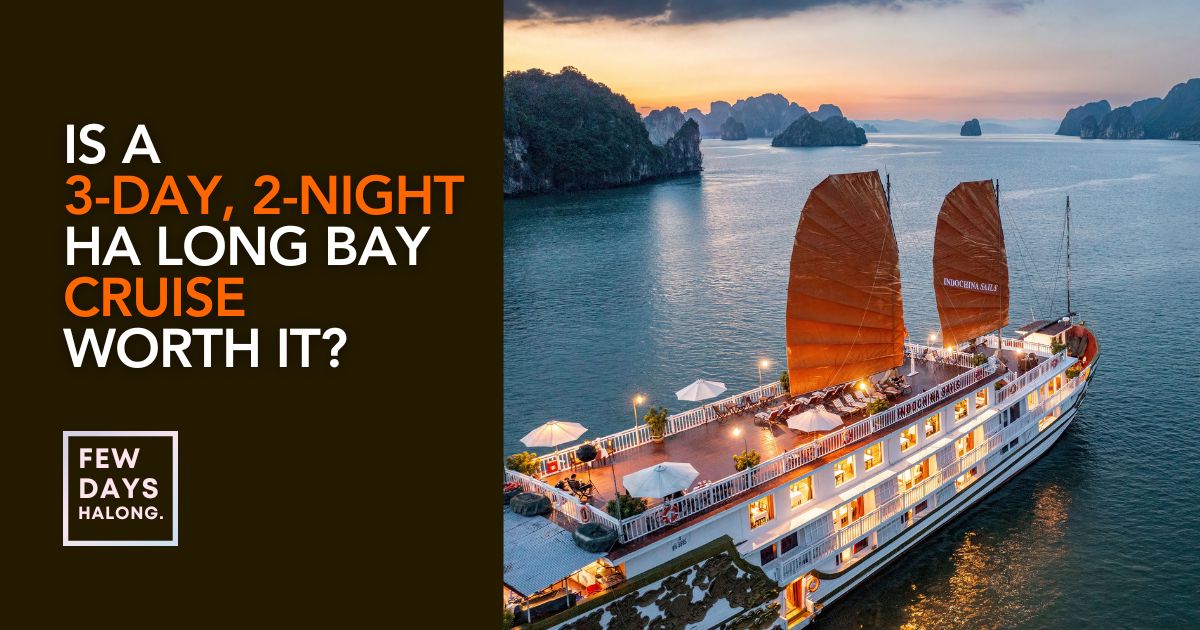
Most Ha Long Bay cruises come in two lengths: a two-day, one-night trip and a three-day, two-night one. The one-night sailing is the classic quick escape from Hanoi, while the second night takes you further out and slows everything down. The extra night costs more and takes another day out of your itinerary, so the honest question is whether it earns its place.
Below is our straight answer, based on planning both lengths for travellers all year round: what the second night actually adds, who it suits and who is fine with one, and how the choice fits the rest of your Vietnam trip. If you want to compare specific boats, our Ha Long Bay cruises page lays them out, and the cruise quiz matches you to one in a couple of minutes.
What a one-night cruise gives you
A two-day, one-night cruise is the standard trip and, for a lot of people, plenty. You leave Hanoi mid-morning, reach the bay by lunch, and spend the afternoon on the headline sights, a cave, a kayak or a swim, a sunset from the top deck, dinner on board, then a single night at anchor. The next morning brings an early activity and brunch as you cruise back, and you are in Hanoi by late afternoon. It captures the bay's big first impression and slots into even a short trip. The trade-off is that it is busy, follows the most popular route, and is over almost as soon as it starts.
What the second night actually adds
The three-day, two-night trip is a different experience rather than just more of the same. With an extra day on the water the boat goes further from the main harbour into quieter corners, swaps some of the set-piece stops for smaller beaches and villages, and gives you a proper full day out on the bay in the middle. There is time for a longer kayak or a tender out to a floating village, an unhurried sunrise with Tai Chi on deck, and simply sitting still while the karsts drift past. It is the difference between seeing Ha Long Bay and spending time in it.
Where the boat goes changes with the nights
Length and route are linked. Many one-night boats work the central Ha Long stretch, which is the most famous and the busiest. Two-night itineraries have the hours to push into Lan Ha Bay or Bai Tu Long Bay, the quieter neighbours where you share the water with far fewer boats. If the crowds are what put you off cruise photos, the second night is often what buys you the calmer, emptier bay, as much as the extra time does.
Who the second night suits
The two-night trip is worth it if you are the sort of traveller who likes to arrive somewhere and unwind rather than tick it off, if photography or kayaking or swimming matter to you, or if this cruise is the restful centre of a busy Vietnam trip. Couples on a slower holiday and families who want the children to properly enjoy the water tend to love the extra day. If the bay is a highlight you have crossed the world to see, giving it two nights rarely disappoints.
Who is fine with one night
One night is the sensible pick if your trip is short and every day counts, if you are prone to seasickness and would rather not spend a second night at anchor, or if you are travelling on a tighter budget. It also suits anyone who wants a taste of the bay without committing a big chunk of the itinerary to it. Plenty of people have a lovely time on a one-night cruise and leave satisfied; it is a real trip, not a consolation.
The cost, and the day it takes
A second night broadly means paying for another night's cabin, meals and activities, so a two-night cruise usually lands close to half as much again as the one-night version on a comparable boat, though it varies by season and standard. Just as important is the day it costs: a two-night cruise ties up three days of your trip against two. On a ten-day-plus Vietnam route that is easy to absorb; on a fast first visit it can mean dropping somewhere else. We would rather match the length to your overall plan than add a night you have no time for.
Seasickness, weather and the time of year
An overnight at anchor is calm, so seasickness is rarely the problem people fear, but a second night does mean a second morning at the mercy of the weather. In the cooler, mistier months the bay can be grey and the views soft, which some travellers find atmospheric and others find flat. If your dates fall in an unsettled spell, one night limits your exposure to a poor-weather morning; in the clear, warm months the extra day is more reliably rewarded. We keep an eye on the forecast as your dates approach and would sooner adjust than send you into a washout.
So, is the second night worth it?
For most people who have the days to spare, yes: the second night is where a Ha Long Bay cruise stops being a quick excursion and becomes a highlight, with quieter water, more time to swim and kayak, and a slower rhythm you cannot get in a single night. Choose one night if your schedule is tight, your budget is firm, or you would rather keep the bay a taster and spend your time elsewhere. There is no wrong answer, only the one that fits your trip, and if you are torn the cruise quiz is a quick way to see which way you lean.
How the cruise fits a wider Vietnam trip
A Ha Long Bay cruise almost always sits near the start of a Vietnam trip, straight after Hanoi and before you head south, so the number of nights you give it shapes everything after. As private planners, we carefully craft the whole route around you: we match the cruise length to how many days you have and how you like to travel, choose the boat and the bay to suit, and handle the Hanoi transfers so the cruise slots in without a scramble. Our north Vietnam tours page shows how the bay links to Hanoi, Ninh Binh and Sapa, and if you are shaping a longer route, our private Vietnam itinerary planning ties the cruise into the whole trip.
Common questions about the second night on Ha Long Bay
Is one night or two nights better on Ha Long Bay?
Two nights is better if you have the time: the boat reaches quieter bays, and you get a full day to swim, kayak and slow down. One night is better for short trips, tighter budgets or anyone prone to seasickness. Both are proper cruises, so it comes down to how many days your Vietnam trip can spare.
What is the difference between a 2-day and a 3-day Ha Long Bay cruise?
A two-day, one-night cruise is an overnight taster on the busier central route, back in Hanoi the next afternoon. A three-day, two-night cruise adds a full middle day, pushes into quieter Lan Ha or Bai Tu Long Bay, and trades set-piece stops for smaller beaches and villages. The longer trip is more relaxed and less crowded.
Is a 3-day, 2-night Ha Long Bay cruise worth the money?
If your itinerary has ten days or more, most travellers find the second night well worth it for the quieter water and the extra day on the bay. On a fast first trip, the cost is as much the lost day as the money, and one night can be the smarter choice. We match the length to your plan rather than add a night you cannot fit.
How much more does a second night cost?
It varies by boat and season, but a two-night cruise on a comparable boat usually costs around half as much again as the one-night version, since you are paying for another night's cabin, meals and activities. For many people the bigger cost is the extra day it takes out of the trip.
Will I get seasick on a two-night cruise?
Rarely. The boat anchors in sheltered water overnight, so it is calm, and most people who worry about seasickness are fine. A second night simply means a second morning subject to the weather, which matters more in the misty months than for motion.
Which bay does a two-night cruise visit?
Two-night itineraries usually have time to reach Lan Ha Bay or Bai Tu Long Bay, the quieter neighbours of the main Ha Long stretch, where there are far fewer boats. One-night cruises more often stay on the central, busier route. If avoiding crowds matters, the longer trip usually helps.
Planning a Ha Long Bay cruise?
Get your free personalised itinerary ›