Cruises
How Much Does a Ha Long Bay Cruise Cost?
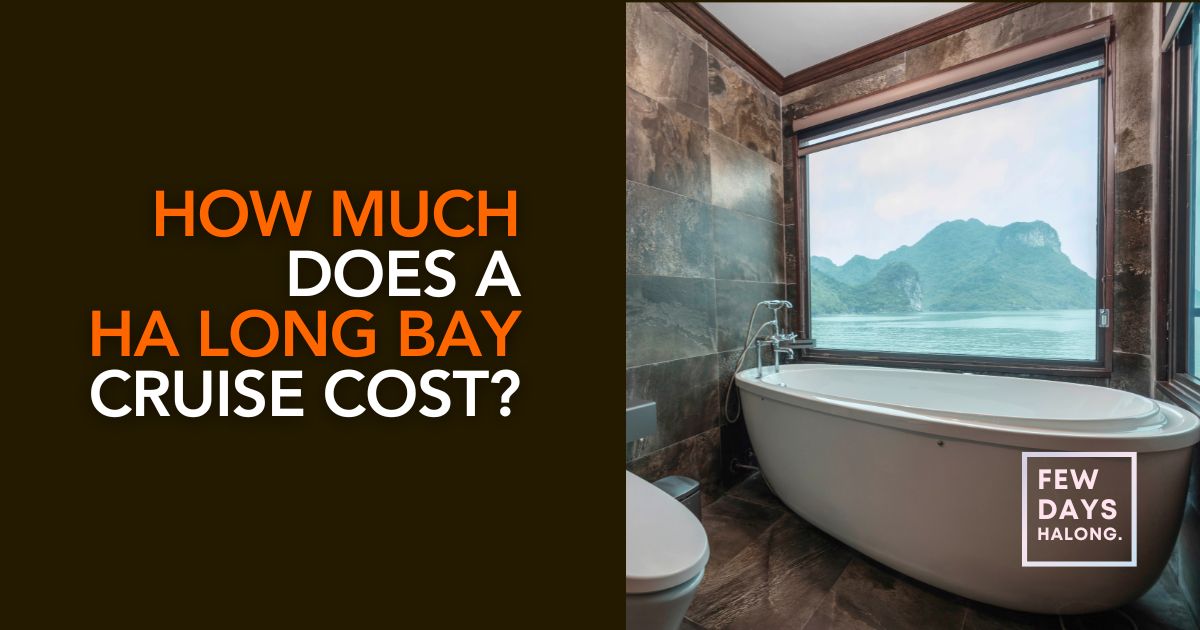
Most overnight Ha Long Bay cruises cost between about US$120 and US$300 per person for the standard two-day, one-night trip in 2026. Budget boats start near US$105, mid-range four-star boats sit around US$145 to 250, and top-end boats run from roughly US$300 upwards. A day trip is cheaper at about US$25 to 90, while a three-day, two-night sailing usually starts around US$250. Almost every fare is quoted per person sharing a cabin, and most leave out drinks, tips and private transfers.
The range is so wide because "a Ha Long Bay cruise" covers everything from a basic day boat to a small boutique ship. Here is what each tier actually buys you, the extras that quietly push the final bill up, worked examples for a couple and a family, and how to tell a fair price from an inflated one.
Ha Long Bay cruise cost at a glance
If you want the quick version, here is how the prices break down per person in 2026. A day cruise is about US$25 to 90. A two-day, one-night trip is roughly US$105 at the budget end, US$145 to 250 for a comfortable mid-range four-star boat, and US$300 or more for the top tier. A three-day, two-night sailing runs from around US$250 on a mid-range boat up to US$800 on the best ships. Those are the headline fares before drinks, tips and any private transfer, which we come to below, and every one is priced per person sharing a cabin.
What you'll pay, by cruise length
Day cruise (no overnight): roughly US$25 to 90 per person. You get four to six hours on the water, a seafood lunch, a cave or two and a short kayak or bamboo-boat ride. It is the cheapest way to see the bay, but you are on the busiest daytime route and back on the coach by late afternoon.
Two days, one night: about US$105 at the budget end, US$145 to 250 for a comfortable mid-range boat, and US$300 or more for the top tier. This is the classic Ha Long Bay cruise and where most travellers land, as one night aboard is enough to see the bay empty out once the day boats leave.
Three days, two nights: from around US$250 for a mid-range boat up to US$800 on the best ships. The second night takes you into the quieter bays and well away from the crowds; it suits people for whom the bay is a highlight rather than a quick stop.
What the tiers actually get you
Budget, three-star (about US$105 to 160): a small en-suite cabin of 12 to 18m² with a window, buffet meals, a shared shuttle from Hanoi and a single route on the main bay. Fine for one night, but the food and cabins are basic and the boats are fuller.
Mid-range, four-star (about US$145 to 250): a larger cabin of 20 to 28m², usually with a private or French balcony, plated multi-course meals, included kayaking and tai chi, and quieter routes through Lan Ha or Bai Tu Long Bay. For most people this is the sweet spot, a clear step up in comfort without the top-tier price.
Top-end, five-star and above (about US$300 to 600 and up): spacious balcony suites of 28 to 40m² or more, proper fine dining, a spa, and far fewer cabins on board. You are paying for space, service and a quieter route rather than a different view of the same karsts.
What's included, and what isn't
A quoted fare almost always covers your cabin, all meals while you are aboard (dinner, breakfast and a light lunch on a one-night trip), an English-speaking guide, the bay entrance fee of around US$12 to 13, drinking water, basic kayaking, and usually the shared shuttle transfer from Hanoi.
What it rarely covers, and what can add 15 to 30% to the headline price, is drinks (beer US$3 to 5, a bottle of wine US$25 to 60), crew and guide tips (budget US$3 to 5 per person per day plus US$5 to 10 for the guide), spa treatments (US$25 to 60), a private car in place of the shared shuttle (US$40 to 80 each way), and drinks packages (US$25 to 45 a day). A US$145 cruise often ends up nearer US$200 a head once you have had a few drinks and tipped the crew.
A realistic all-in cost example
It helps to see where the money actually goes. Take a comfortable mid-range four-star boat for two days and one night at US$180 per person. Add a shared drinks tab of around US$25, tips of about US$12 for the crew and guide, and you are at roughly US$217 a head, or about US$434 for a couple sharing a cabin. Swap the shared shuttle for a private car at US$60 each way and the couple's total lands near US$554. None of these are surprises once you know they are coming, and the honest way to read a cruise price is always as the fare plus the few extras above, not the headline figure alone.
Would you rather have this planned for you?
We are private Vietnam specialists, not resellers, and we never take commission. Tell us your dates and we will build a tailor-made itinerary and run the whole trip for you, arrival to departure. Rated five-star on Tripadvisor.
Get your free itinerary ›What a cruise costs for a couple or a family
Because fares are per person sharing, a couple simply doubles the per-person rate, so a mid-range four-star night works out around US$290 to 500 for the two before extras. A family of four in two cabins on the same boat is roughly US$580 to 1,000 for the night, though many boats offer a family or connecting cabin that brings this down. Children aged six and over are usually charged 50 to 75% of the adult fare, so a family of four with two younger children often lands nearer US$450 to 750 all in. It is always worth asking about triple and connecting cabins, which not every boat carries but which can save a useful amount.
What makes one cruise cost more than another
Four things drive most of the difference: the cabin (its size, and whether it has a real balcony), the boat itself (age, size and how many cabins it carries), the route (the main Ha Long Bay is busiest, while Lan Ha and Bai Tu Long are quieter for much the same scenery, often at a similar or slightly lower price), and the season (roughly October to April is peak, and the shoulder months are cheaper).
One hidden factor is commission. Many booking sites earn a cut from the cruise lines and mark the fare up to cover it, so the same cabin can carry very different prices depending on where you book. We work the other way round.
Solo travellers, families and children
Cruising alone usually carries a single supplement of 30 to 50% on top of the per-person sharing rate, because cabins are priced on two people sharing. Children aged six and over are typically charged 50 to 75% of the adult fare, and a family cabin tends to cost around 1.5 to 1.8 times a single fare. If you are travelling as a family, it is worth asking about connecting or triple cabins, which not every boat offers.
When is it cheapest to cruise?
Season makes a real difference to the price. The peak runs roughly from October to April, when the weather is cool and dry and fares and demand are at their highest, especially over Christmas, New Year and the Lunar New Year. The hot summer months from May to September are cheaper and can bring good value on the same boats, with the trade-off of heat, the odd storm and a small chance of a sailing being adjusted for weather. The shoulder weeks either side of peak, late April and early October, often hit the sweet spot of decent weather and softer prices. Midweek departures are also usually a little cheaper and quieter than weekends.
How to keep the cost down
A few simple habits trim the bill without spoiling the trip. Book a mid-range four-star boat rather than the top tier, as the jump in price buys space and service rather than a better view. Travel midweek and outside the Christmas and Lunar New Year peaks. Share the shuttle unless the timings really matter to you. Go easy on the drinks packages if you are not a big drinker, and pay as you go instead. Consider Lan Ha Bay, which is often a touch cheaper than the main bay and much quieter. And book with a planner who does not take commission, so the price you pay is not padded to cover a booking site's cut.
How we come in
We are planners, not resellers, and we never take commission, so we have no reason to steer you toward the boat that pays us most rather than the one that suits you. We match the cruise length and tier to your dates, your budget and how the bay fits the rest of your Vietnam trip, and we will tell you honestly where the extra money is worth it and where it is not. Our private Vietnam itinerary planning and our Ha Long Bay cruise collection are the place to start, and it is free with no obligation.
Frequently Asked Questions
How much is a Ha Long Bay cruise for 2 days and 1 night?
Expect roughly US$105 per person at the budget end, US$145 to 250 for a comfortable mid-range four-star boat, and US$300 or more for the top tier, all per person sharing a cabin, before drinks and tips.
Are Ha Long Bay cruises worth the money?
For most travellers, yes, at the mid-range level. Below about US$100 a night the cabins, food and boats noticeably drop off, while the very top tier is more about space and service than a better view. If you are deciding how long to spend aboard, our guide to one night versus two goes into it.
What's included in a Ha Long Bay cruise price?
Usually your cabin, all meals aboard, an English-speaking guide, the bay entrance fee, drinking water, basic kayaking and a shared transfer from Hanoi. Drinks, tips, spa treatments and a private car are almost always extra, and can add 15 to 30% to the headline fare.
How much does a day trip to Ha Long Bay cost?
A day cruise runs about US$25 to 90 per person including lunch, a cave and a short paddle. It is the cheapest option but also the busiest, and our guide to whether a day cruise is worth it weighs it up.
How much is a Ha Long Bay cruise for a family of four?
Roughly US$580 to 1,000 for a night in two cabins on a mid-range four-star boat, before extras. With two children aged six or over, charged 50 to 75% of the adult fare, it often lands nearer US$450 to 750 all in. Ask about family, triple or connecting cabins, which can bring the cost down.
Is it cheaper to cruise Ha Long Bay in summer?
Yes, the hot months from May to September are generally cheaper than the October to April peak, with the trade-off of heat, the odd storm and a small chance of a weather adjustment. Late April and early October often give the best balance of good weather and softer prices, and midweek departures are cheaper than weekends.
Is Lan Ha Bay cheaper than Ha Long Bay?
Prices are broadly similar for equivalent quality, and Lan Ha is often a touch less while being far quieter for much the same scenery. Our Ha Long vs Lan Ha vs Bai Tu Long comparison explains the trade-offs.
Ready to start planning?
Tell us your dates and we will build you a tailor-made Vietnam itinerary, free and with no obligation. We are private specialists, not resellers, we never take commission, and we run the whole trip for you, arrival to departure. Rated five-star on Tripadvisor.
Get your free itinerary ›